
Tornado in a box
A vortex forms on the table in front of them, close enough to put a hand through. Students change one variable at a time and watch the column tighten, wobble or fall apart.
Packages & experiences
The packages below are designed for public schools, homeschools, community events, and private events. Customization is possible for organizations with specific needs. Everything below is priced on the Pricing page, and everything is aligned to grade-level science standards you can check before you commit a period to it.
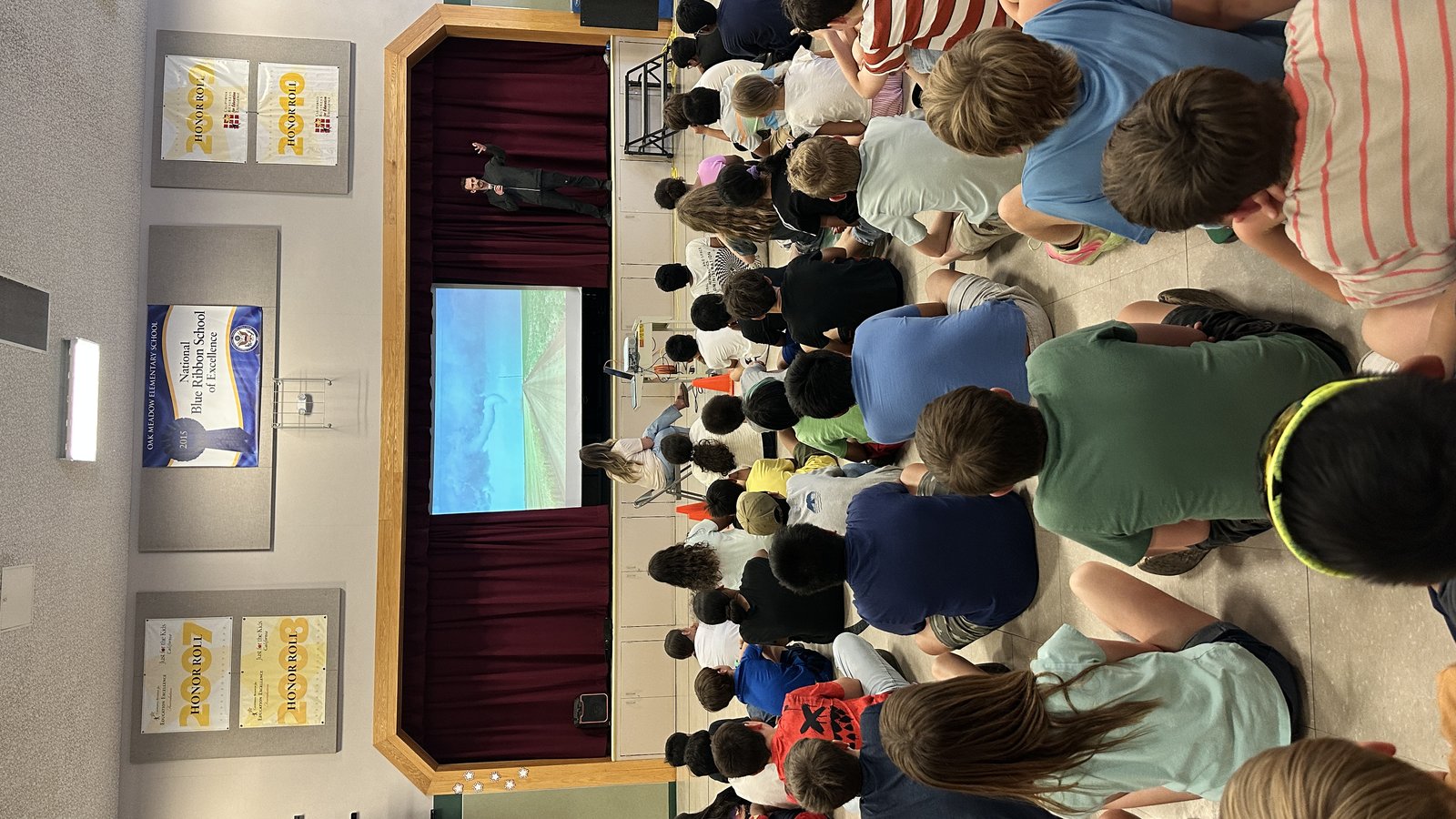
Up to roughly 400 students per showing. Two showings on one visit at no extra charge.
Format one
Thirty minutes. The whole school. The one that gets talked about at pickup.
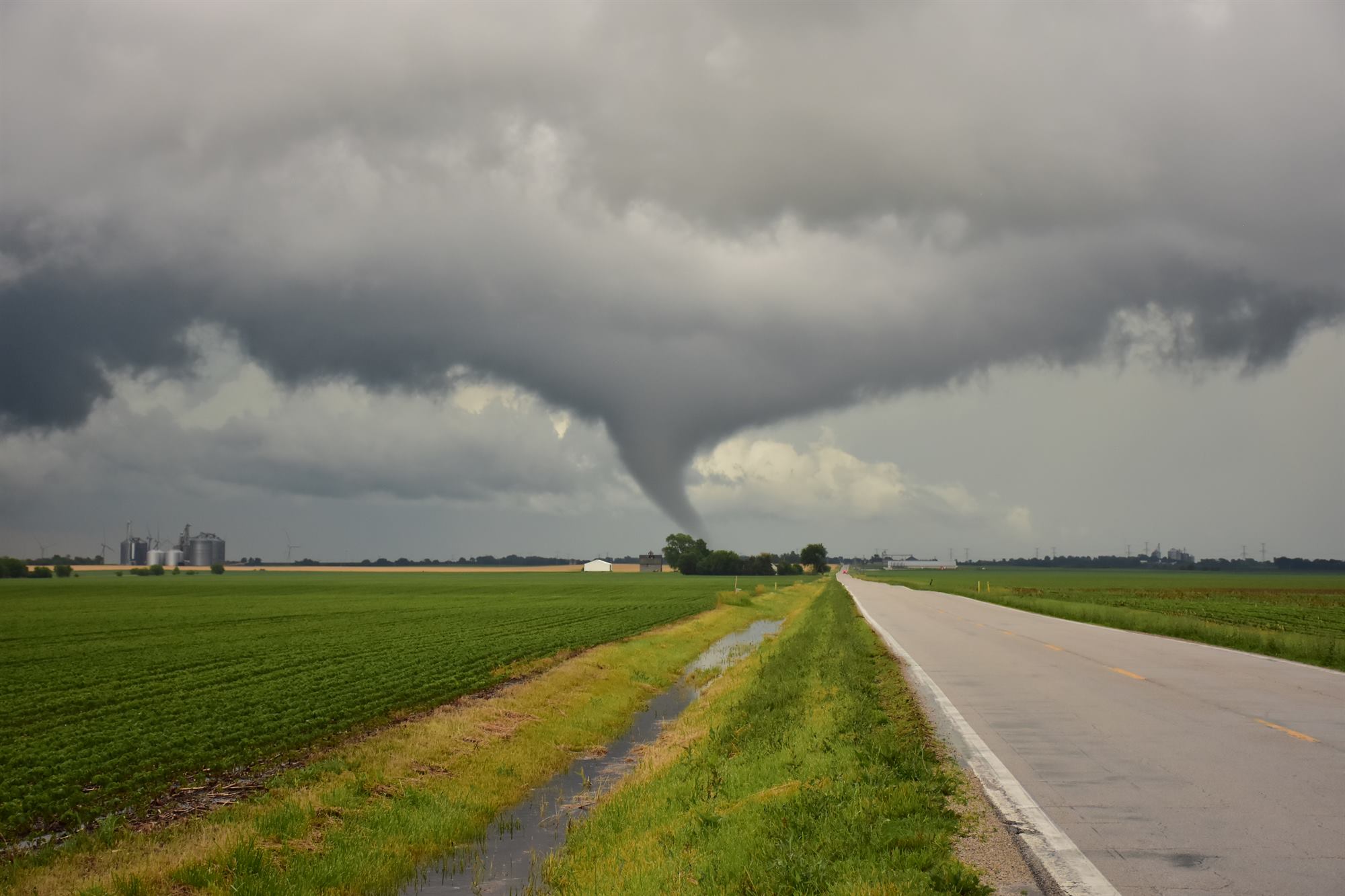
This thrilling 30-minute assembly features a multimedia presentation packed with David's personal tornado intercept footage, atmospheric simulations, and student-friendly life skills. In addition, the students will witness a live liquid nitrogen cloud demo, interactive tornado display, and 6ft tall vapor tornado.
Format two
Not currently offeredThirty minutes per class, in the classroom, built to the standards that grade is accountable for.
This is where the science gets done properly. Two core lessons rotate depending on the grade: how a tornado actually forms, and the hydrologic cycle. Both are interactive. Students model the process rather than watch it, and the vocabulary they leave with is the vocabulary in your unit.
A worked example. A school with four 5th-grade classes books grade-level lessons. Each of the four classes gets its own 30-minute lesson in its own room. Nobody is merged into the library, nobody watches from the back.
Format three
Not currently offeredThe gym or multipurpose room becomes a working weather lab. Classes rotate through in groups, roughly 30 to 45 minutes each, for as much of the day as your schedule allows. Nobody sits and listens. Everybody does something.
A vortex forms on the table in front of them, close enough to put a hand through. Students change one variable at a time and watch the column tighten, wobble or fall apart.
Meta Quest headsets running a looped 360 degree supercell and tornado video. Students take turns standing in front of a storm and looking straight up into the rotation. This is the station they queue for.
A green screen, a camera and a real forecast graphic. Students deliver the forecast on air and watch themselves back standing in front of the map. Quiet kids volunteer for this one.
Hands-on manipulatives for condensation, cloud formation and the hydrologic cycle. Students build a cloud in a container and then find that same process in the storm footage they saw earlier.
For transitional kindergarten, kindergarten and 1st grade the program runs fully station-based. There is no sit-still segment at all. They move between the vortex table, the cloud demos and the studio in small groups, with their own teacher alongside them. It holds their attention because it never asks them to hold still.
Format four
An evening they'll remember!
Every school has a night on the calendar that struggles for attendance: STEM night, back-to-school night, family science night, etc. Now, with the Severe Storms Lab Family night your school will be struggling to find enough parking spaces.
This is that thing. A 30 to 60 minute presentation for the whole family, with footage adults lean forward for, followed by open station time where parents put on the VR headset next to their kid and take a turn at the forecast desk. Schools consistently report it pulls in the family members who never come to school events, and that it is the first evening where parents stay past the end time.
Standards alignment
Open by grade band. Every classroom lesson is mapped to the performance expectations that grade is accountable for, so a teacher can see what they are getting before giving up a period. This section prints cleanly if you need to attach it to a funding request or a principal's approval.
Codes shown are Next Generation Science Standards. If your state uses its own framework, ask and the equivalent codes will be sent for your grade levels.
Beyond elementary
The core material is the same storm. What changes is the depth, the vocabulary and what students are asked to do with it.
Older students get the analytical version. Live radar interpretation, hook echoes and velocity couplets, storm mode, and the decision-making behind a warning. They work with the same data a forecaster works with.
The closing segment is career and college readiness, and it is the part that changes minds. Pathways into meteorology, emergency management and atmospheric science, what those degrees actually involve, and what the jobs pay. It ends with the people who do this work: chasers from a wide range of backgrounds, plenty of whom did not follow a straight line into it. Students who assumed science careers were not for them tend to recognise somebody on that screen.
Co-ops book the station format most often, because it handles a 6-year-old and a 15-year-old in the same room without either being bored. Parents take part rather than supervise. Groups can combine across co-ops to share the cost, and the standards alignment doubles as portfolio documentation for families who need to record coverage.
With a smaller student body the whole school often fits in one showing, which frees the rest of the day for classroom lessons or stations. Independent schools without a district framework get lessons mapped to whichever standards they use.
For intro meteorology, earth science and emergency management programs: a working practitioner's account of forecasting, positioning and risk, plus the transfer pathways into four-year atmospheric science degrees. Also runs well as an evening public lecture the college can open to the community.
Next step
Send your dates, your student count and the format you are leaning toward. If you are not sure which combination fits, say so and he will suggest one.